Polystyrene (PS)
What is Polystyrene (PS)?
Polystyrene (PS) is a petroleum-based synthetic polymer made from styrene monomers, creating either rigid plastic or expanded foam (commonly known as Styrofoam). Polystyrene comes in two main forms: solid polystyrene (used for disposable cutlery and plastic cups) and expanded polystyrene foam/EPS (used for takeout containers, coffee cups, packing materials, coolers). PS is valued for its low cost, lightweight, insulating properties (foam), and ease of molding. However, polystyrene is one of the most problematic plastics from both health and environmental perspectives, leaches styrene (a human carcinogen), breaks apart easily into microplastics and is virtually impossible to recycle (less than 1% is recycled), is banned in many cities worldwide, and persists in the environment for 500+ years while causing significant harm to marine ecosystems.
For those seeking plastic-free living, polystyrene should be avoided by opting for plastic-free alternatives.
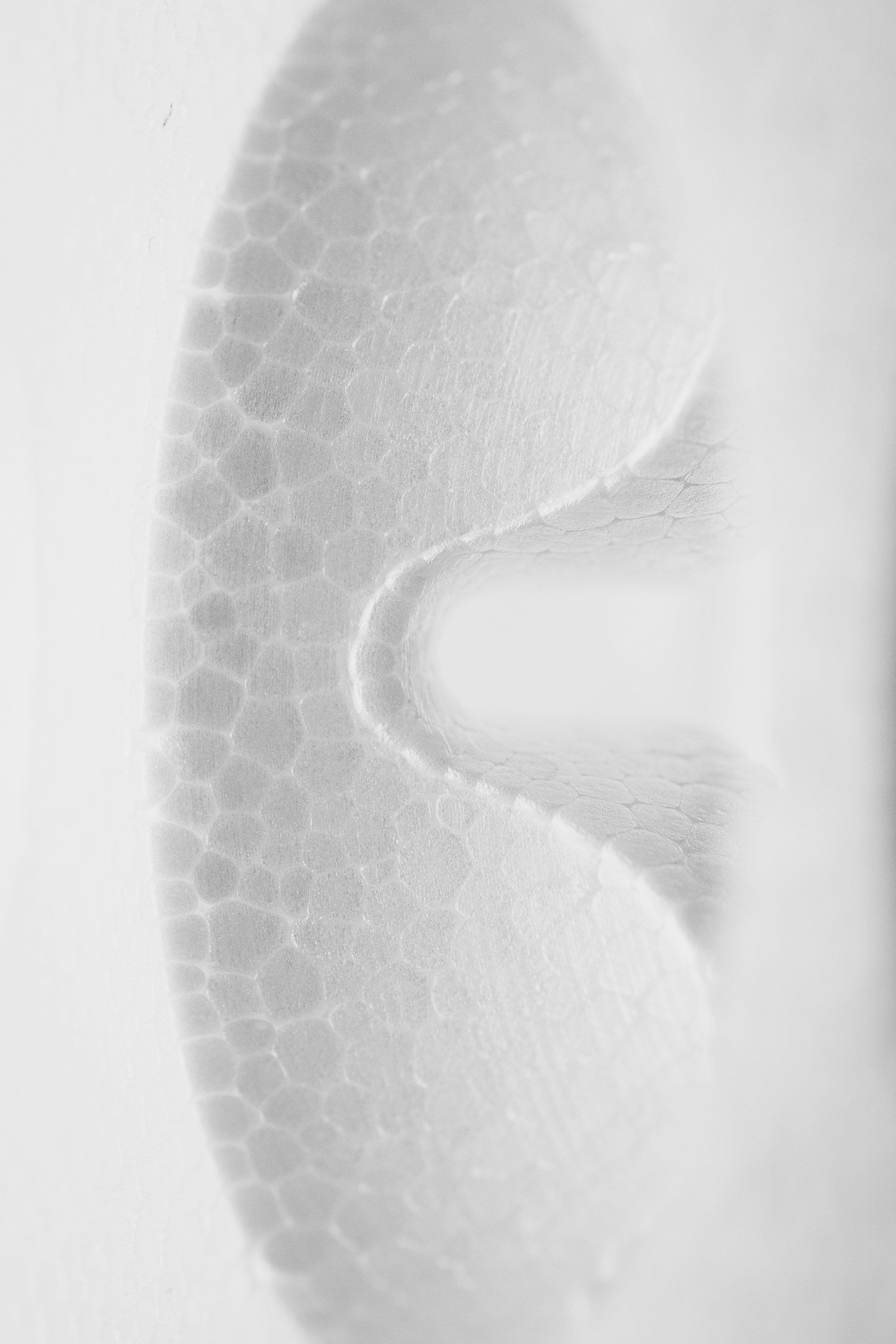
Close-up of polystyrene foam. Photo: Unsplash
Common Uses for Polystyrene (PS)
Food Service (Foam EPS): Takeout containers, coffee cups, plates, bowls, clamshell containers, soup cups
Packaging Materials: Foam peanuts, protective foam inserts, electronics packaging, foam blocks
Grocery Packaging: Meat trays, produce trays, egg cartons, bakery containers
Disposable Items: Cutlery (forks, spoons, knives), clear plastic cups, plastic plates
Coolers & Insulation: Foam coolers, ice chests, insulation boards, foam panels
Is Polystyrene (PS) Safe? Health & Safety Recommendations
Microplastic Concerns: Polystyrene is one of the worst plastics for microplastic pollution and exposure. PS foam takeout containers crumble when handled, while hot liquids and acidic foods only cause the material to break down faster, releasing even more microplastics. The foam structure ensures PS never fully breaks down, only fragmenting into smaller pieces indefinitely.
Chemical Safety: Outside of microplastic shedding, polystyrene's primary health concern is the leaching of styrene, a human carcinogen. Styrene exposure is linked to: increased cancer risk (leukemia, lymphoma), reproductive effects, developmental issues, neurological effects (headaches, fatigue, dizziness), hormone disruption. The most common use case of polystyrene - hot coffee or tea foam cups - shed additional styrene from the exposure to hot liquids.
Close-up of polystyrene foam. Photo: Unsplash
Frequently Asked Questions About Polystyrene (PS)
Is polystyrene plastic?
Yes, polystyrene is plastic. It's a petroleum-based synthetic polymer made from styrene monomers. Both solid polystyrene and expanded polystyrene foam (Styrofoam) are plastic, identified by recycling symbol #6.
Does polystyrene shed microplastics?
Yes, polystyrene is one of the worst plastics for microplastic exposure pollution. Foam polystyrene breaks apart extremely easily into small pieces and microplastics, especially with exposure to high heat food and liquids.
Is Styrofoam safe for food?
No, polystyrene foam (Styrofoam) is not safe for food, particularly hot foods or beverages. The microplastic shedding and styrene leaching properties of PS make it unsuitable for food storage.