Buckwheat Hulls
What are Buckwheat Hulls?
Buckwheat hulls are the outer protective shells of buckwheat seeds (Fagopyrum esculentum), a plant native to Central and Eastern Asia that has been cultivated for over 8,000 years. The hulls are naturally firm yet malleable, allowing them to conform to shape while providing support, and they remain cool to the touch due to air circulation between individual hulls.
The material is hypoallergenic, resistant to dust mites, biodegradable, and does not shed microplastics, though the hulls can be noisy when compressed and may require occasional replacement as they break down over time.
For plastic-free living, buckwheat hulls offer an excellent natural alternative to synthetic pillow fills like polyester fiberfill or memory foam (polyurethane).
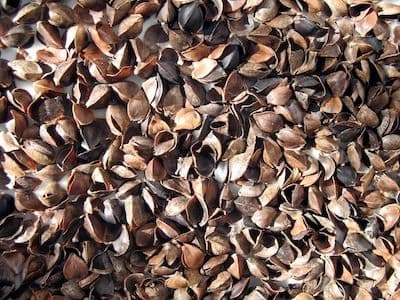
Unprocessed buckwheat hulls. Photo: Wikipedia
Common Uses for Buckwheat Hulls
Buckwheat hulls are used across multiple categories:
Sleep Products: Pillows, neck rolls, body pillows, travel pillows
Meditation & Yoga: Zafu cushions, meditation pillows, yoga bolsters
Seating: Seat cushions, floor cushions, chair pads
Therapeutic: Heating/cooling packs, neck wraps, eye pillows
Pet Products: Pet beds, pet pillows
Specialty: Upholstery filling, draft stoppers, weighted items
Are Buckwheat Hulls Safe? Health & Safety Recommendations
Microplastic Concerns: Buckwheat hulls do not shed microplastics. They are natural plant material that is completely biodegradable and breaks down into organic compost. This makes buckwheat hull pillows far superior to polyester-filled pillows that shed microplastic fibers through the fabric weave, potentially leading to inhalation during sleep.
Chemical Safety: Buckwheat hulls are naturally unprocessed and typically require no chemical treatment. However, some suppliers may fumigate or heat-treat hulls for pest control, and conventional buckwheat farming may use pesticides (though buckwheat generally requires fewer pesticides than most crops). Organic buckwheat hull fill ensures no pesticide residues and no fumigation with synthetic chemicals. Unlike memory foam pillows that can off-gas volatile organic compounds (VOCs), buckwheat hull pillows emit no chemical odors.
Certifications to Look For: USDA Organic certification ensures buckwheat was grown without synthetic pesticides and hulls weren't fumigated with harmful chemicals. OEKO-TEX certification can apply to the pillow covering fabric. Look for suppliers who specify "heat-treated" rather than chemically fumigated hulls if organic isn't available.
Recommendations: Choose organic buckwheat hull pillows when possible to avoid pesticide residues on material you'll sleep on for 8 hours nightly. Replace buckwheat hulls every 2-3 years as they naturally break down into smaller pieces that lose support.
Unprocessed buckwheat hulls. Photo: Wikipedia

Frequently Asked Questions About Buckwheat Hulls
Are buckwheat hulls plastic-free?
Yes, buckwheat hulls are completely plastic-free. They are natural plant material - the outer shells of buckwheat seeds. Buckwheat hulls are fully biodegradable and compostable, containing no petroleum-based materials.
Does buckwheat hulls shed microplastics?
No, buckwheat hulls do not shed microplastics. Over time, buckwheat hulls do break down into smaller pieces, but these are compostable plant fragments, not persistent plastic particles. This is especially important for pillows where you breathe near the material for 8 hours nightly.
Are buckwheat hulls biodegradable?
Yes, buckwheat hulls are fully biodegradable. They decompose naturally in 2-6 months in a compost pile, breaking down into rich organic matter that enriches soil. Buckwheat hulls can be added straight into a compost bin or garden at end of life.
Are buckwheat hull pillows noisy?
Yes, buckwheat hull pillows can make a rustling sound when you move or compress them - the sound of hulls sliding against each other. The noise level varies by hull quality and pillow construction. If noise is a concern, look for pillows with finer-grade hulls which rustle less than larger hulls.
How long do buckwheat hull pillows last?
Buckwheat hull pillows typically last 3-5 years with regular use. Over time, the hulls naturally break down into smaller pieces, lose their structure, and become powdery. When you notice the pillow no longer provides adequate support or contains a lot of fine dust, it's time to replace the hulls (you can keep the cover and buy replacement hulls).
Can I wash a buckwheat hull pillow?
No, never wash buckwheat hulls themselves - water will cause them to deteriorate and potentially mold. Buckwheat hulls can however be removed and sunned occasionally (spreading them out in direct sunlight for a few hours) to refresh them and eliminate any moisture, but this isn't necessary with regular use.
Are buckwheat hull pillows good for neck pain?
Many people with neck pain report significant improvement with buckwheat hull pillows. The hulls conform to your head and neck shape while maintaining firm support that keeps the spine aligned - unlike foam that compresses or down that flattens. The adjustability (add or remove hulls) allows you to find the exact loft for your sleeping position. However, buckwheat pillows are firmer than conventional pillows and require an adjustment period. Consult with a healthcare provider for severe neck issues.
Do buckwheat hulls attract bugs?
No, buckwheat hulls naturally resist bugs. The hulls are hard, dry, and inedible, making them inhospitable to dust mites, bed bugs, and other pests. In fact, buckwheat hull pillows are often recommended for people with dust mite allergies because dust mites cannot survive in the dry, hard hull environment.
Can I adjust the firmness of a buckwheat hull pillow?
Yes, adjustability is one of buckwheat hull pillows' major advantages. Most buckwheat pillows have zippered covers allowing you to add or remove hulls. This customization is impossible with foam or down pillows.