Cast Iron
What is Cast Iron?
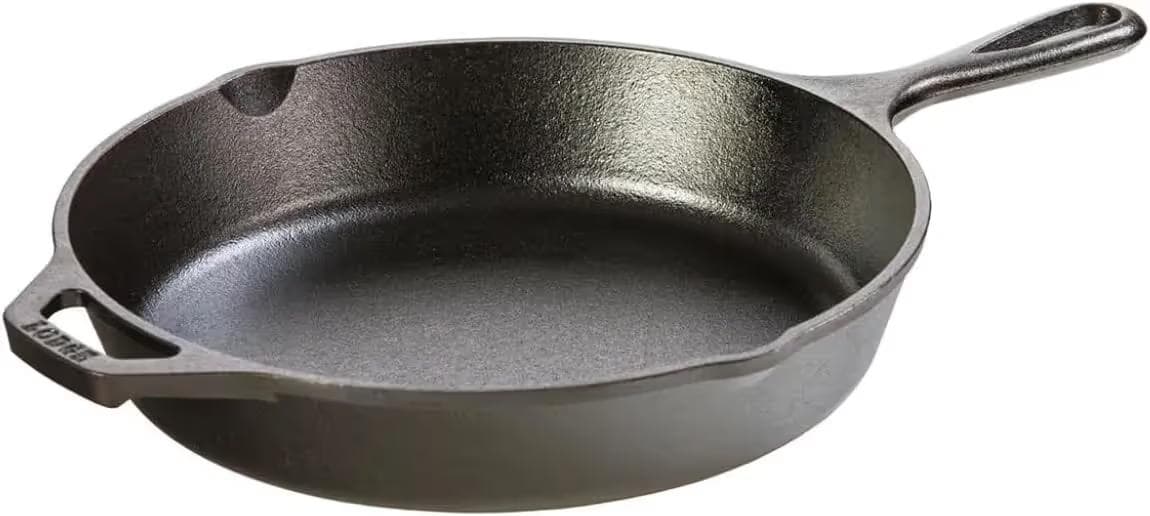
Cast iron is an iron-carbon alloy (typically 2-4% carbon) that has been used for cookware for over 2,000 years. The material is created by melting iron and pouring it into molds (casting), resulting in cookware that is exceptionally durable, retains heat remarkably well, and can last for generations or even centuries with proper care.
Cast iron develops a natural non-stick surface through seasoning - repeated applications of oil that polymerize into a hard, protective coating that improves with use. The material is chemically inert when properly seasoned, does not leach harmful chemicals, and does not shed microplastics, though it requires more maintenance than modern non-stick cookware and can rust if not properly cared for.
For plastic-free living, cast iron represents one of the safest, most sustainable cookware options available. Unlike non-stick coatings (Teflon/PTFE) that release toxic fumes when overheated and degrade over time, cast iron's seasoning is completely natural and actually improves with use. Cast iron's exceptional heat retention and even heat distribution make it superior to thin aluminum or stainless steel for searing, frying, and baking.
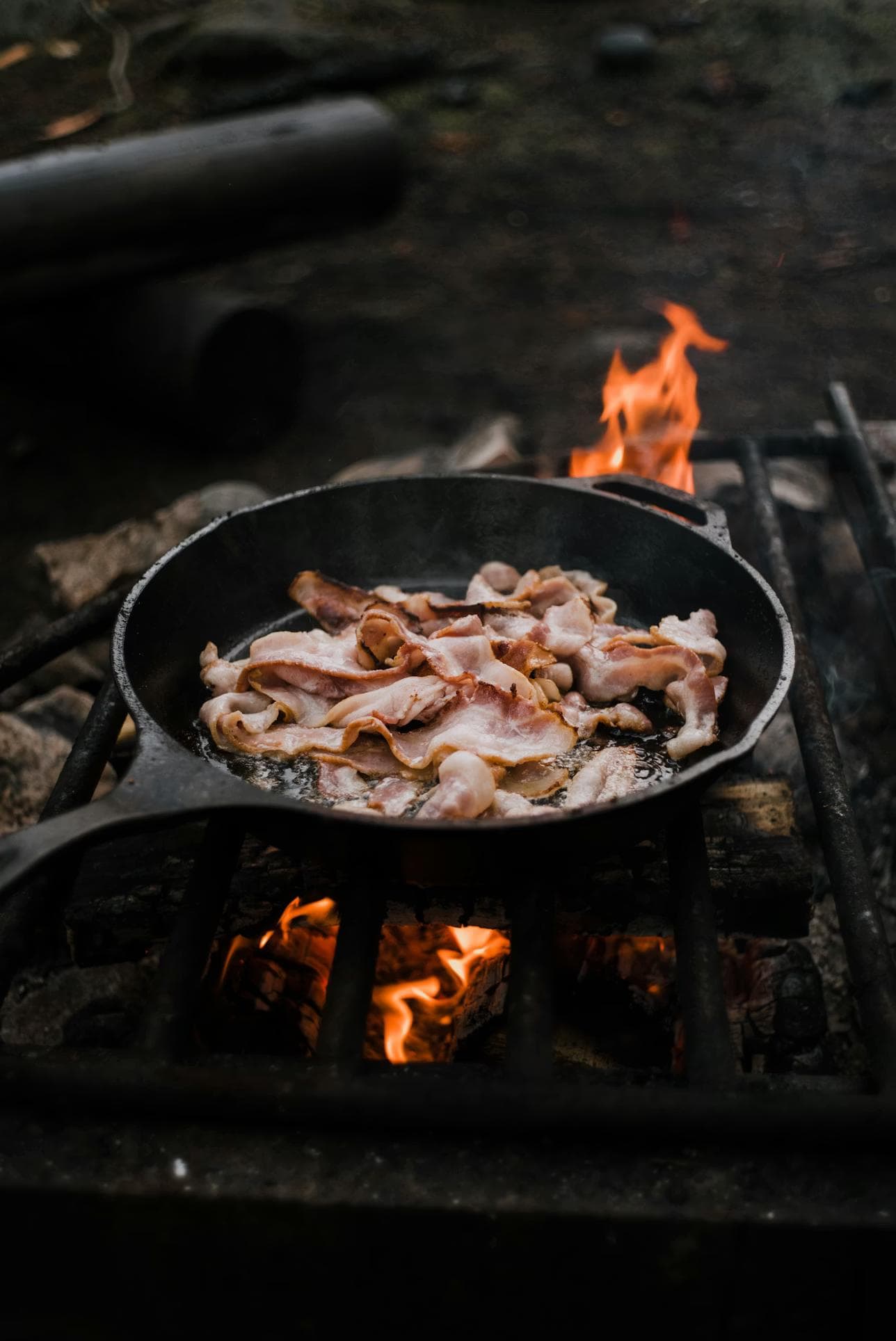
Cast iron skillet over an open flame. Photo: Unsplash
Common Uses for Cast Iron
Cast iron is used across multiple categories:
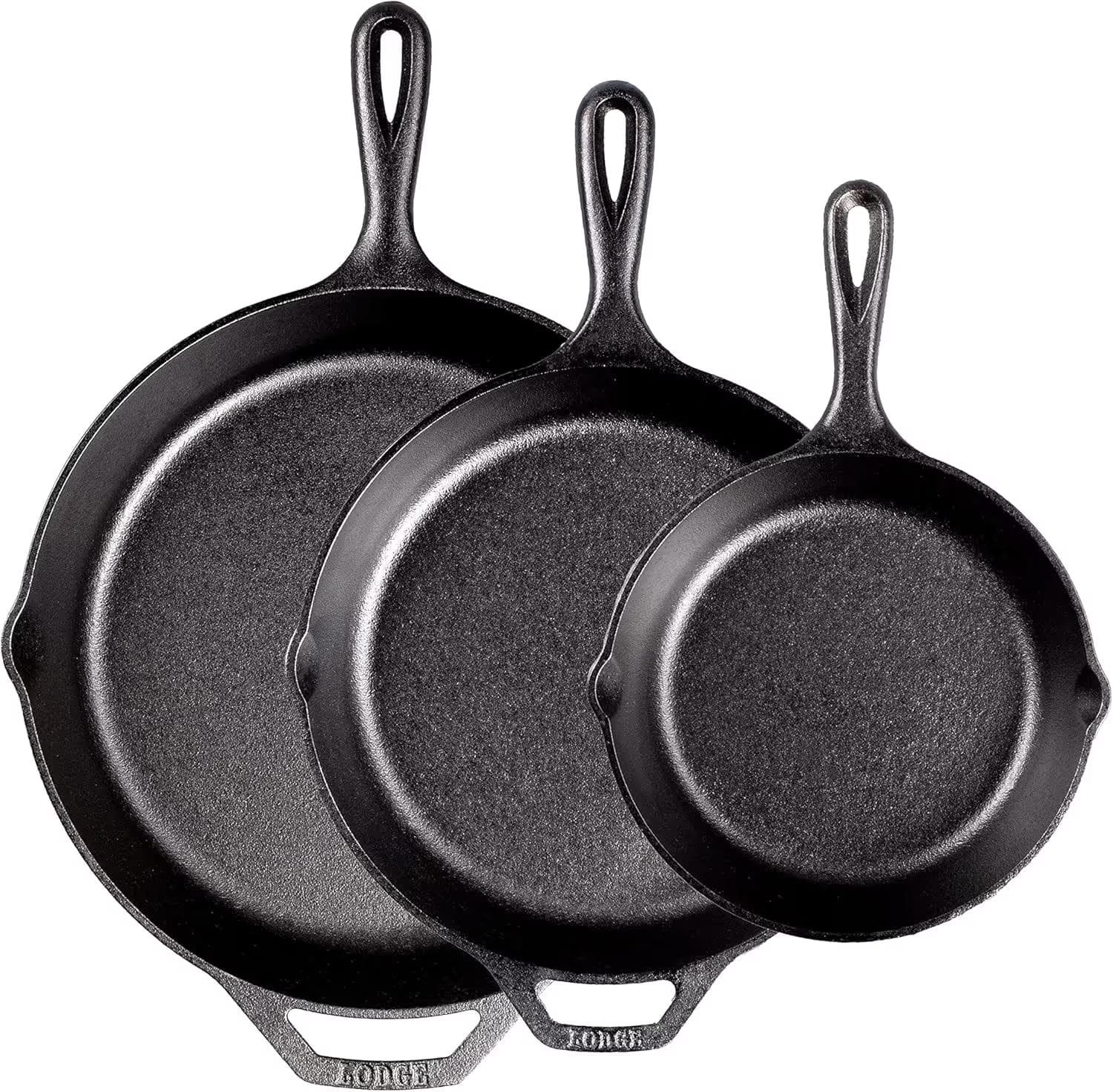
Stovetop Cookware: Skillets, frying pans, griddles, grill pans, sauté pans
Oven/Baking: Dutch ovens, cornbread pans, pizza pans, deep-dish pans, muffin tins
Specialty Cooking: Woks, crepe pans, paella pans, tortilla presses
Outdoor Cooking: Camp Dutch ovens, camping skillets, fire ring grates
Serving: Sizzle platters, serving skillets (fajita pans)
Non-Cooking: Trivets, door stops, decorative cookware displays
Is Cast Iron Safe? Health & Safety Recommendations
Microplastic Concerns: Cast iron does not shed microplastics. It is a metal alloy that remains completely stable during cooking and does not break down into particles.
Chemical Safety: Cast iron does not leach harmful substances like PFAS (forever chemicals) found in non-stick cookware or aluminum that some studies link to health concerns. However, cast iron does leach small amounts of dietary iron into food, particularly when cooking acidic foods (tomatoes, vinegar-based sauces).
Certifications to Look For: Cast iron doesn't typically carry food safety certifications as it's inherently safe. Look for products made in countries with strict manufacturing standards (USA, Europe) to ensure quality iron without concerning impurities. Enameled cast iron should have lead-free enamel - reputable manufacturers (Le Creuset, Staub, Lodge) guarantee lead-free coatings.
Recommendations: Season cast iron regularly with high-smoke-point oils (flaxseed, grapeseed, avocado oil) to maintain the non-stick surface and prevent rust. Avoid cooking highly acidic foods for extended periods in unseasoned or lightly seasoned cast iron (acids can strip seasoning and increase iron leaching). Dry cast iron thoroughly after washing to prevent rust.
Cast iron skillet over an open flame. Photo: Unsplash
Frequently Asked Questions About Cast Iron
Is cast iron plastic-free?
Yes, cast iron is completely plastic-free. It's a metal alloy of iron and carbon (2-4% carbon) with no petroleum-based materials whatsoever.
Does cast iron shed microplastics?
No, cast iron does not shed microplastics. As a metal, it remains stable and does not break down into particles during normal use. This makes cast iron infinitely safer than non-stick cookware (where coatings can flake into food) or silicone cookware that may degrade.
Is cast iron biodegradable?
No, cast iron is not biodegradable, but this is actually advantageous. Cast iron is an extremely durable metal that lasts indefinitely with proper care. At end of life (virtually never if maintained), cast iron is 100% recyclable and can be melted down to create new iron products. The extreme longevity means cast iron rarely needs recycling, making it highly sustainable despite not being biodegradable.
Is cast iron seasoning safe?
Yes, cast iron seasoning is completely safe. Seasoning is simply oil that has been heated to its smoke point, causing it to polymerize (chemically bond) into a hard, smooth coating. This polymerized oil is stable, non-toxic, and creates a natural non-stick surface, unlike synthetic non-stick coatings (PTFE/Teflon).
Does cast iron leach iron into food?
Yes, cast iron leaches small amounts of dietary iron into food, particularly when cooking acidic foods (tomatoes, citrus, vinegar). For most people, this is beneficial - the iron is bioavailable and helps prevent iron deficiency anemia. Studies show cooking in cast iron can significantly increase iron content in food. However, people with hemochromatosis (iron overload disorder) should avoid cast iron or use enameled cast iron instead. Well-seasoned cast iron leaches less iron than new or poorly seasoned pans.
How do I season cast iron?
Seasoning cast iron involves coating the entire surface with a thin layer of oil (flaxseed, grapeseed, or avocado oil), then heating it in the oven at 450-500°F for one hour. The oil polymerizes into a hard, protective coating. Repeat 3-6 times for new pans. Maintain seasoning by cooking with oil/fat regularly and avoiding harsh detergents. If seasoning degrades (food sticks, rust appears), strip and re-season. Well-seasoned cast iron is naturally non-stick and rust-resistant.