Goose Down
What is Goose Down?
Goose down consists of the soft, fluffy undercoating clusters harvested from geese, prized for being larger and more resilient than duck down due to geese's larger body size and longer maturation period. The larger cluster size of goose down creates more air pockets and better loft, resulting in superior insulation per ounce compared to duck down.
For plastic-free living, goose down represents the premium tier of natural insulation, providing exceptional insulation while remaining incredibly lightweight and breathable, properties that synthetic fills have never successfully replicated.
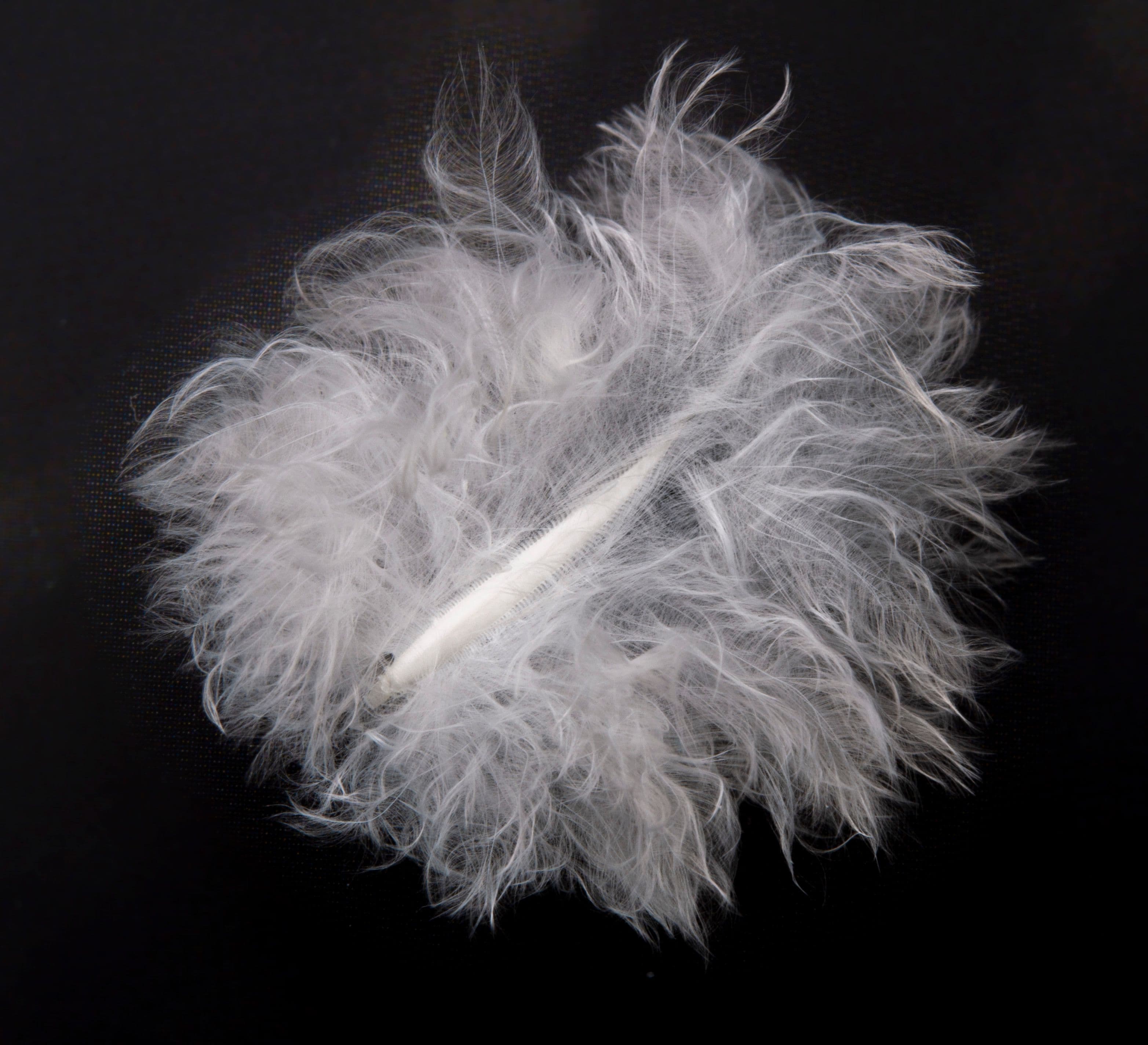
Goose down. Photo: Wikipedia
Common Uses for Goose Down
Luxury Bedding: Premium comforters, high-end duvets, luxury pillows, mattress toppers
High-Performance Outerwear: Expedition jackets, mountaineering parkas, ultra-light down jackets, packable vests
Sleeping Gear: Backpacking sleeping bags, mountaineering bags, expedition quilts, cold-weather camping bags
Home Textiles: Luxury throw pillows, premium cushions (high-end only)
Is Goose Down Safe? Health & Safety Recommendations
Microplastic Concerns: Goose down does not shed microplastics. It is natural waterfowl plumage composed of proteins (keratin) that biodegrade completely into organic matter.
Chemical Safety: High-quality goose down is among the cleanest natural fills due to rigorous processing standards required for premium products. Some down products are treated with DWR (durable water repellent) coatings to improve water resistance - these may contain PFAs or other chemicals that raise health concerns. For apparel and bedding, choose untreated goose down or products using PFA-free treatments.
Certifications to Look For: RDS (Responsible Down Standard) ensures geese were not live-plucked or force-fed. Downpass certification covers both animal welfare and product quality. Global Traceable Down Standard provides full supply chain transparency. OEKO-TEX Standard 100 ensures no harmful substances in the final product. IDFL (International Down and Feather Laboratory) certification verifies fill power claims and down-to-feather ratios. European goose down often carries origin certifications (Hungarian Down, Polish Down) indicating premium quality.
Goose down. Photo: Wikipedia


Frequently Asked Questions About Goose Down
Is goose down plastic-free?
Yes, goose down is completely plastic-free. It is the natural undercoating plumage of geese, composed of protein (keratin) with no petroleum-based materials.
Does goose down shed microplastics?
No, goose down does not shed microplastics. Any particles that escape through fabric shells are natural, biodegradable protein material.
Is goose down biodegradable?
Yes, goose down is fully biodegradable. As animal protein (keratin), it decomposes naturally in 6-12 months under proper composting conditions, breaking down into nitrogen-rich organic matter. This biodegradability combined with goose down's exceptional longevity (15-20+ years for quality products) makes it highly sustainable compared to synthetic alternatives that require frequent replacement and persist as microplastic pollution.
How long does goose down last compared to synthetic insulation?
Premium goose down products significantly outlast synthetic alternatives with proper care, lasting 3 to 4 times as long as synthetic-based fill which last up to 5 years.