Ceramic Enamel
What is Ceramic Enamel?
Ceramic enamel, also called porcelain enamel or vitreous enamel, is a coating made from powdered glass fused to a metal substrate (typically cast iron or steel) at high temperatures, creating a smooth, glass-like surface that is chemically inert, non-porous, and highly durable.
Enamel provides a non-reactive cooking surface that doesn't require seasoning like bare cast iron, resists staining and odor absorption, and creates natural non-stick properties when properly preheated and used with adequate fat.
For plastic-free living, ceramic enamel offers an excellent combination of cast iron's heat retention and durability with a maintenance-free, non-reactive surface. Unlike synthetic non-stick coatings (Teflon/PTFE) that degrade and release chemicals, ceramic enamel is stable, contains no PFAS or harmful chemicals, and lasts decades when properly cared for.
While enameled cookware is heavy and more expensive than bare cast iron, the convenience and safety justify the investment for many households seeking high-quality, plastic-free cookware.
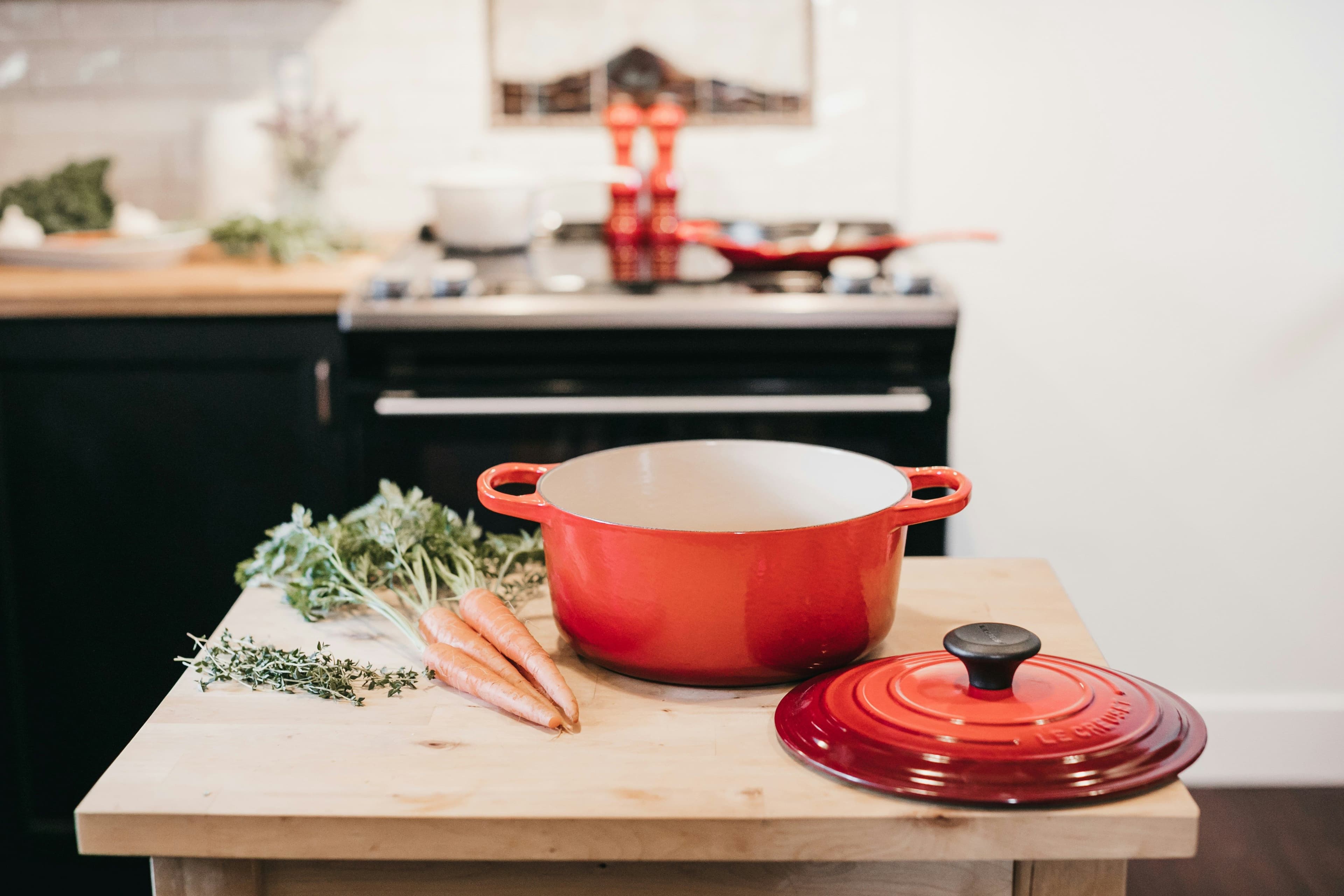
Ceramic enamel-lined pot. Photo: Unsplash
Common Uses for Ceramic Enamel
Ceramic enamel is used across multiple categories:
Cookware: Dutch ovens, braisers, saucepans, sauté pans, frying pans, stockpots
Bakeware: Casserole dishes, baking pans, roasting pans, pie plates, gratin dishes
Kitchen Items: Mixing bowls, colanders, tea kettles, canisters, utensil holders
Home Fixtures: Bathtubs, sinks, range surfaces, appliance exteriors
Serveware: Serving dishes, platters, trivets, baking-to-table dishes
Decorative: Jewelry, artwork, signage, decorative bowls
Is Ceramic Enamel Safe? Health & Safety Recommendations
Microplastic Concerns: Ceramic enamel does not shed microplastics. It is a glass-like inorganic coating that remains completely stable and does not break down into particles during normal use. Enameled cookware and bakeware are completely free from microplastic concerns, making them far superior to non-stick coatings that can flake into food.
Chemical Safety: High-quality ceramic enamel is extremely safe and non-reactive. The enamel coating is essentially glass fused to metal, containing no PFAS (forever chemicals), PTFE (Teflon), or other synthetic non-stick chemicals. Enamel does not react with acidic foods (tomatoes, wine, citrus) or alkaline substances, making it suitable for all cooking applications.
Certifications to Look For: FDA compliance for food contact surfaces. Lead-free and cadmium-free certification (particularly important for colored enamel). California Prop 65 compliance. PFAS-free certification (though genuine enamel inherently contains no PFAS). Look for products from reputable manufacturers with transparent safety testing.
Recommendations: Don't use metal utensils on enamel (causes chipping) - use wood when possible. Avoid thermal shock (don't place hot enamel cookware in cold water or on cold surfaces) which can crack enamel. Enameled cast iron is dishwasher-safe but hand washing extends the coating's life.
Ceramic enamel-lined pot. Photo: Unsplash
Frequently Asked Questions About Ceramic Enamel
Is ceramic enamel plastic-free?
Yes, ceramic enamel is completely plastic-free. It is made from powdered glass (primarily silica) fused to metal at extremely high temperatures (1,200-1,500°F). The process creates a glass-like coating containing no petroleum-based materials, synthetic polymers, or plastics whatsoever.
Does ceramic enamel shed microplastics?
No, ceramic enamel does not shed microplastics. As a glass-like inorganic coating, it remains completely stable and does not break down into particles during normal use, making it far superior to synthetic non-stick coatings that can flake or degrade into food.
What utensils on ceramic enamel?
Wood utensils are the best option for ceramic enamel cookware. Metal tools can chip, scratch, or damage the enamel surface, while silicone can release microplastics on contact with hot surfaces.
Can enameled cookware go in the dishwasher?
Yes, most high-quality enameled cookware is dishwasher-safe. However, hand washing is recommended to extend the life of the enamel and prevent dulling of the finish. Dishwasher detergents are harsh and can gradually dull the enamel's luster over time.