Tritan
What is Tritan?
Tritan is a trademarked copolyester plastic developed by Eastman Chemical Company, made from three monomers: dimethyl terephthalate (DMT), cyclohexanedimethanol (CHDM), and either terephthalic acid or isophthalic acid, creating a clear, durable plastic that mimics polycarbonate's properties without containing BPA. Marketed extensively as "BPA-free" and "safe," Tritan quickly became popular for reusable water bottles, baby bottles, food storage containers, kitchen products, and the Nalgene water bottle brand. However, the company responsible for Tritan has had a history of controversial court cases, where endocrine-disrupting properties were found by independent researchers.
For those seeking plastic-free living, the plastic material Tritan found in popular brands like Nalgene can be easily avoided with plastic-free alternatives. Some water bottles made from materials like titanium can achieve the lightweight properties needed to justify plastic-free alternatives in specific use cases such as camping or backpacking.
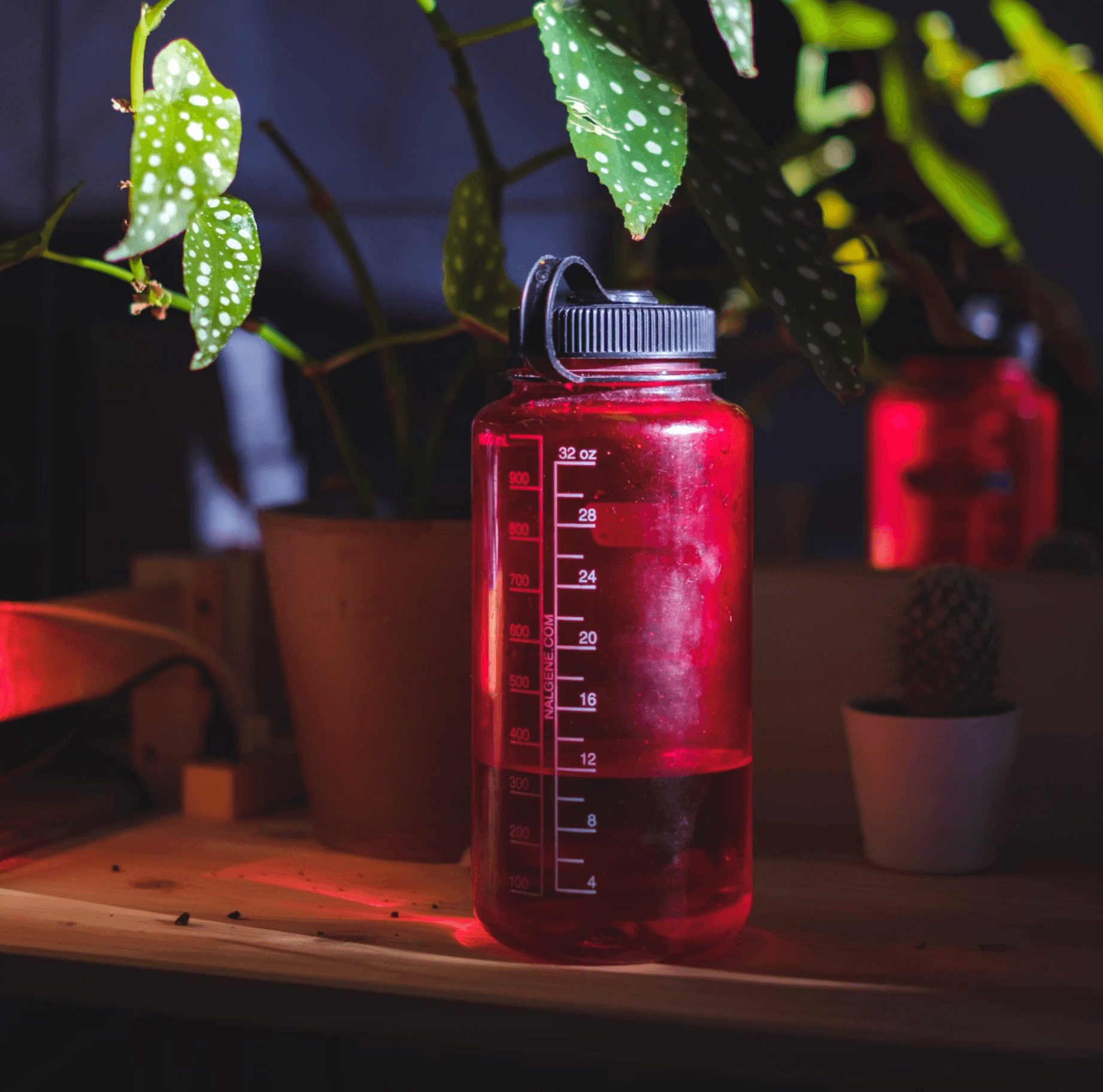
Nalgene bottle made from Tritan. Photo: Unsplash
Common Uses for Tritan
Beverage Containers: Water bottles, sports bottles, travel mugs, tumblers, drinking glasses
Sports & Outdoor: Hydration bottles, camping containers, cycling bottles
Is Tritan Safe? Health & Safety Recommendations
Microplastic Concerns: Tritan sheds microplastic particles like other plastics. While marketed as "safer" plastic, Tritan still contributes to microplastic pollution in bodies and environments.
Chemical Safety: Tritan's safety is highly controversial despite "BPA-free" marketing. While it may be less prone to harmful chemical leaching than other plastics, avoiding this material entirely is still recommended.
Nalgene bottle made from Tritan. Photo: Unsplash
Frequently Asked Questions About Tritan
Is Tritan plastic?
Yes, Tritan is plastic. It's a petroleum-based copolyester (synthetic polymer) developed as a BPA-free alternative to polycarbonate. While marketed as different from "traditional plastics," Tritan shares the same fundamental and harmful characteristics as other plastics.
Does Tritan shed microplastics?
Yes, Tritan sheds microplastics like other plastics. Tritan bottles release microplastics through normal wear and friction. Despite "BPA-free" marketing, Tritan still contributes to microplastic shedding in bodies and environments.