Acrylic
What is Acrylic?
Acrylic is a synthetic polymer fiber made from acrylonitrile, a petroleum-derived chemical, through polymerization processes developed in the 1940s-1950s. Designed to mimic wool's warmth and softness at lower cost, acrylic quickly became popular for sweaters, blankets, and cold-weather accessories. The fiber is lightweight, wrinkle-resistant, retains color well, and resists moths and mildew that can damage natural wool.
For those seeking plastic-free living, acrylic is one of the most problematic synthetic fibers to avoid. Not only does it shed substantial amounts of microplastic fibers during washing and wear, acrylic also pills heavily with friction, melts when exposed to high heat, and provides inferior warmth and breathability compared to natural wool.
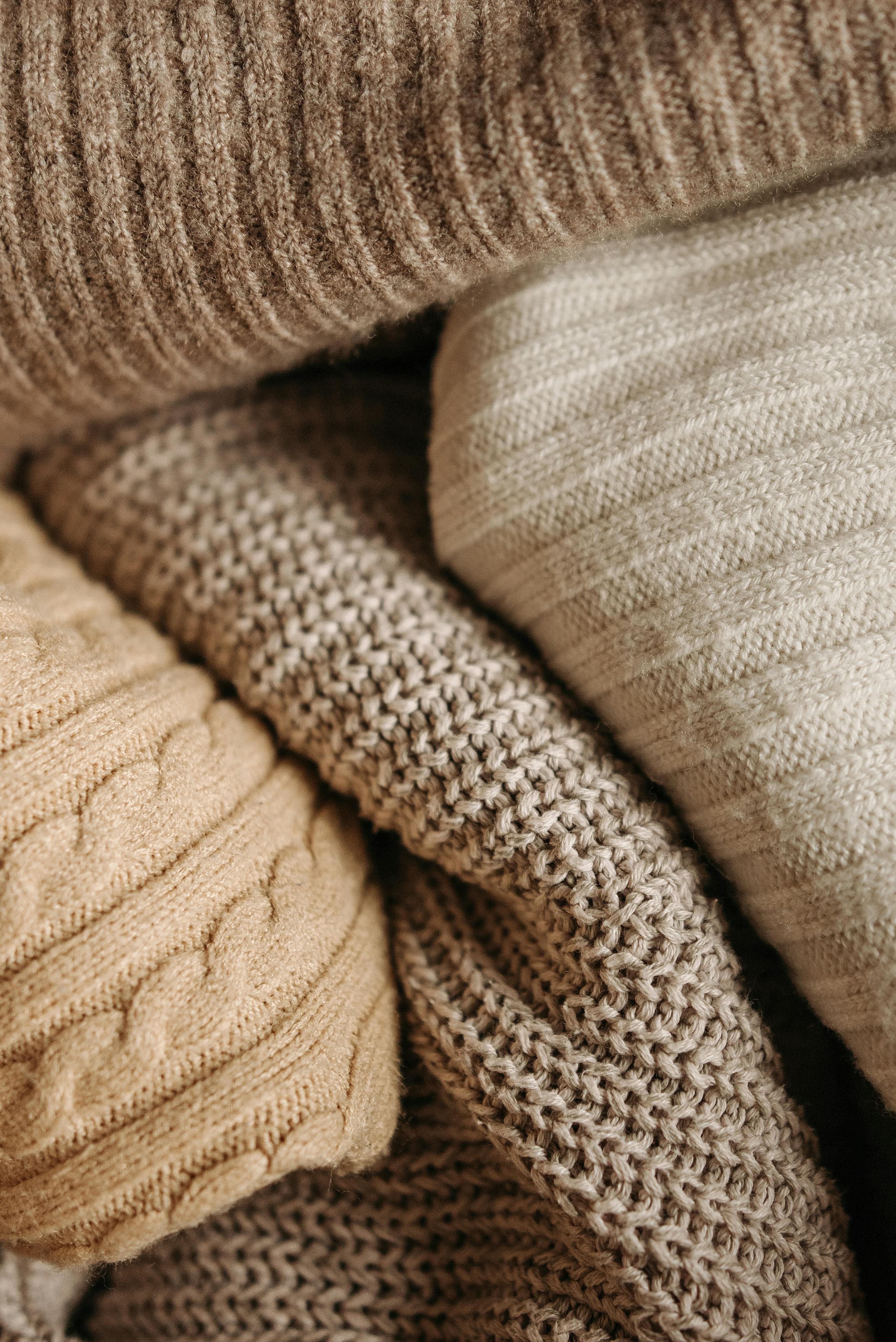
Common patterns of acrylic used in sweaters and hats. Photo: Pexels
Common Uses for Acrylic
Apparel: Sweaters, cardigans, hoodies, pullovers
Cold-Weather Accessories: Hats, beanies, scarves, gloves, mittens, socks
Blankets & Throws: Fleece blankets, decorative throws, baby blankets
Fake Materials: Faux fur, sherpa fleece, synthetic fleece
Yarn & Crafts: Knitting yarn, crochet yarn, craft projects
Home Textiles: Upholstery, curtains, decorative pillows, rugs
Outdoor: Awnings, boat covers, outdoor cushions (solution-dyed acrylic)
Blends: Often mixed with wool, cotton, or polyester
Is Acrylic Safe? Health & Safety Recommendations
Microplastic Concerns: Acrylic sheds significant amounts of microplastic fibers, comparable to or exceeding polyester. Acrylic's fuzzy, pilled surface structure causes it to shed more fibers than smooth synthetics through both washing and wear. Wearing acrylic sweaters releases microplastics onto the wearer's skin, as well as into indoor air that can be inhaled. This persistent plastic pollution enters food chains and poses long-term health risks.
Chemical Safety: Acrylic production involves acrylonitrile, a suspected carcinogen that can leave residual traces in finished fabric. Manufacturing also uses toxic solvents and additives. Finished acrylic fabric may contain chemical residues from processing, dyes, and treatments (flame retardants, antimicrobial agents, softeners). New acrylic items often have a strong chemical odor from off-gassing volatile organic compounds (VOCs). Acrylic doesn't breathe, trapping sweat and heat against skin, which can cause rashes, irritation, and fungal infections in people with sensitive skin. The fabric generates significant static electricity, attracting dust and potential allergens.
Common patterns of acrylic used in sweaters and hats. Photo: Pexels
Frequently Asked Questions About Acrylic
Is acrylic plastic?
Yes, acrylic is plastic. It's a synthetic polymer made from acrylonitrile, a petroleum-derived chemical. Acrylic fabric is essentially plastic fibers designed to mimic wool's appearance and feel. Just like how polyester is wearable plastic, acrylic sweaters and blankets are plastic textile products.
Does acrylic shed microplastics?
Yes, acrylic sheds significant amounts of microplastics - often more than polyester due to its fuzzy, pilled surface structure. A single acrylic sweater can release hundreds of thousands of microplastic fibers in one wash cycle. Acrylic also sheds microplastics through wear and friction, contributing to airborne microplastic pollution in homes.
Is acrylic better than wool?
No, acrylic is inferior to wool in almost every way. Wool is warmer, naturally breathable, wicks moisture away from skin, naturally flame-resistant, biodegradable, doesn't shed microplastics, naturally elastic (doesn't lose shape), resists odors, can be worn multiple times between washes. The only advantages acrylic holds over natural wools are the relative cost, lighter weight, and machine-washing capabilities, but these pros are far outweighed by the safety concerns of acrylic.
What should I do with acrylic items I already own?
Given acrylic's high microplastic shedding, it is recommended to replace apparel and bedding immediately with plastic-free alternatives. This is even more important for clothing pieces that directly touch the skin - acrylic beanies and sweaters are the most common in an average person's wardrobe.